Every business has the same question in 2026: "How do we get an AI assistant that actually knows our stuff?" The answer, almost always, is Retrieval Augmented Generation (RAG). This guide explains RAG in plain English, when it beats fine-tuning, and how to build a private AI knowledge base that your team can actually trust.
What is Retrieval Augmented Generation (RAG)?
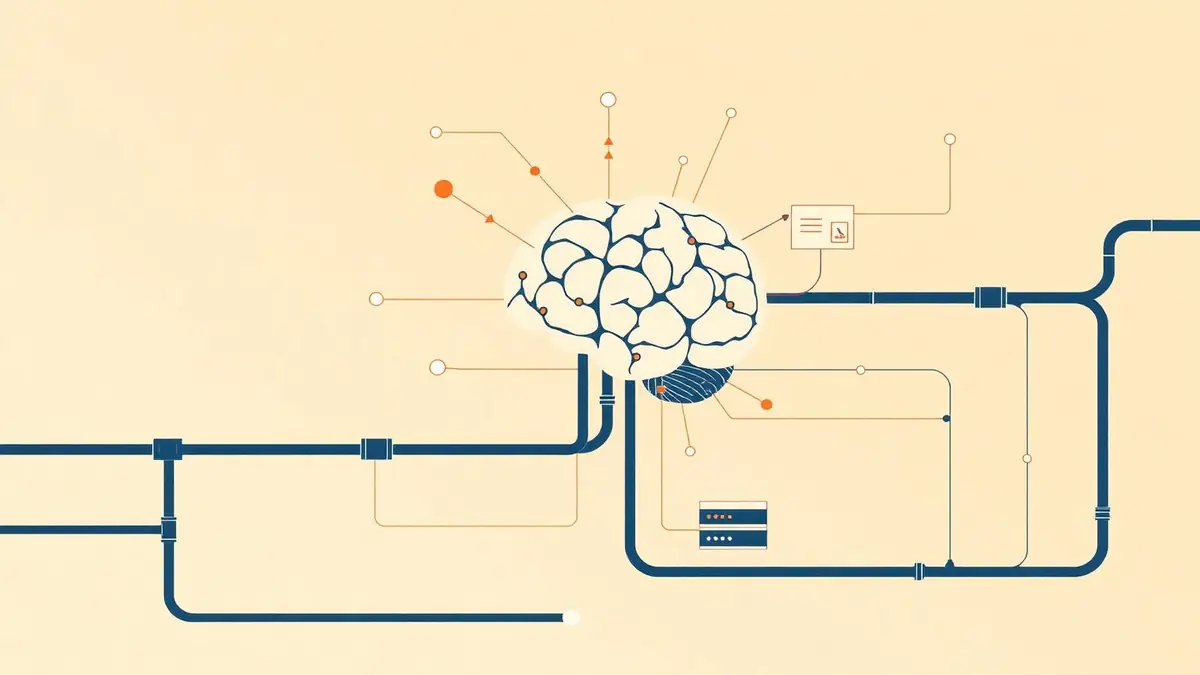
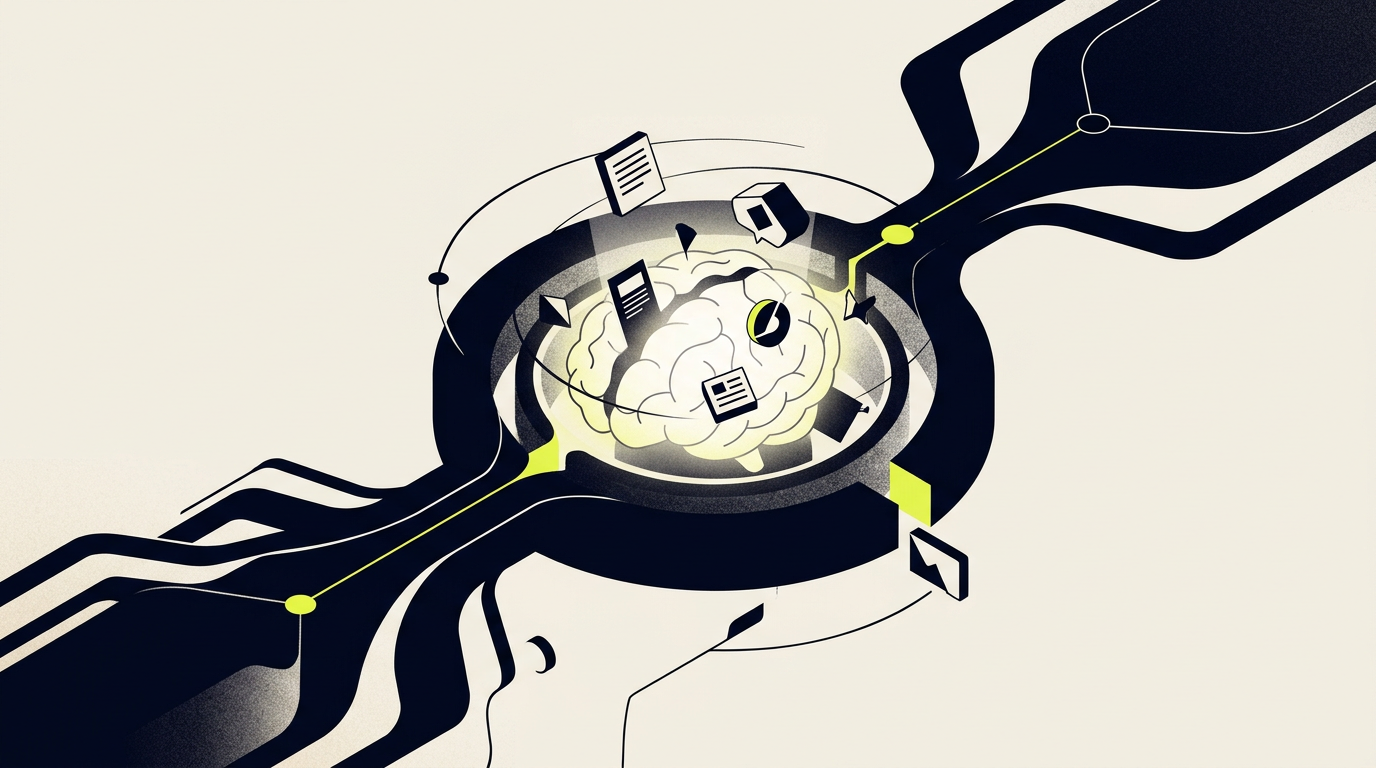
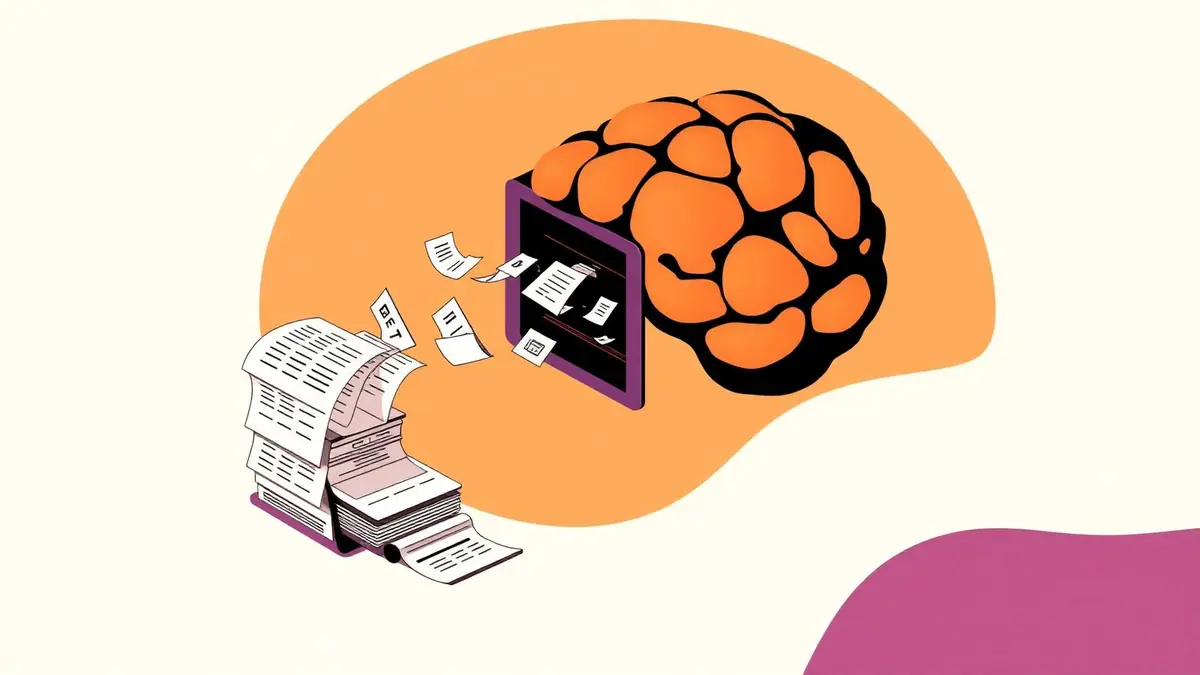
RAG is a pattern where a large language model looks up relevant information from your data at the moment of the question, then uses that information to answer. Instead of hoping the model "knows" your policies, product, or codebase, you retrieve the right documents and feed them to the model as context.
The result: answers grounded in your own data, updated the moment you change a document, with citations you can verify.
RAG vs fine-tuning — when to use which
- Use RAG when the knowledge changes often, you need citations, you can't leak data into a shared model, or you have thousands of docs. This covers 90% of business use cases.
- Use fine-tuning when you need to teach the model a style, a format, or a narrow classification task. Fine-tuning changes behavior; RAG changes knowledge.
- Use both when you have a domain-specific voice AND a large knowledge base — fine-tune for tone, RAG for facts.
What a modern RAG pipeline actually looks like
1. Ingestion
Pull documents from your sources — Notion, Google Drive, Confluence, SharePoint, Zendesk, your database, your CRM. Convert PDFs, DOCX and HTML into clean text.
2. Chunking
Split long documents into semantically meaningful chunks (typically 300–800 tokens). Good chunking is 40% of RAG quality — do not skimp here.
3. Embedding
Turn each chunk into a vector using an embedding model (OpenAI text-embedding-3-large, Voyage, Cohere). Store the vectors in a vector database — pgvector, Pinecone, Weaviate, Qdrant, or LanceDB.
4. Retrieval
On every query, embed the question, find the top-k nearest chunks, and combine with keyword search (BM25). Hybrid search beats vector-only in almost every real-world benchmark.
5. Reranking
Feed the top 20–50 candidates into a cross-encoder reranker (Cohere Rerank, Voyage Rerank) to pick the best 3–8. This single step usually adds the most quality per dollar.
6. Generation
Send the reranked chunks + the user question to your LLM with a strict "answer only from the context, cite sources" system prompt.
High-ROI RAG use cases for business
- Internal knowledge assistant — a Slack bot that answers HR, IT and policy questions grounded in your handbook.
- Customer support copilot — every agent gets instant answers pulled from tickets, docs and product data.
- Sales enablement — reps ask "how do we compete against X on procurement?" and get the right battlecard.
- Legal / compliance search — instant, cited answers over contracts and policies.
- Codebase Q&A — new engineers ramp up 10× faster with a RAG over the repo and internal wiki.
- Customer-facing search — replace "keyword search" on your docs site with a real answer engine.
The 6 mistakes that make RAG projects fail
- Bad chunking. Splitting on fixed character counts destroys context. Split on headings, paragraphs and semantic boundaries.
- Vector-only retrieval. Pure semantic search misses exact matches (product SKUs, error codes). Always combine with BM25.
- No reranking. Top-k from ANN search is noisy. A reranker is the single highest-leverage upgrade.
- No evals. Build a 50–200 question golden set and grade every change. Vibes-based iteration wastes months.
- Ignoring metadata. Filter by team, date, permissions and source before retrieval. Most "bad answers" are actually permission leaks.
- One giant index. Split by domain (support vs sales vs engineering). Small, tight indexes beat one huge one.
Choosing a vector database in 2026
- pgvector (Postgres) — start here. If you already run Postgres, this is the lowest-friction option and scales further than most teams expect.
- Qdrant / Weaviate — open-source, self-hostable, strong filtering and hybrid search.
- Pinecone — managed, fast, expensive at scale. Great for teams that want zero ops.
- LanceDB — embedded, file-based, ideal for on-device or edge RAG.
Security & privacy for enterprise RAG
Every serious RAG deployment needs: per-user permission filters at retrieval time, PII scrubbing on ingestion, audit logs on every query, and a model provider that contractually does not train on your data (Azure OpenAI, Anthropic on AWS Bedrock, self-hosted Llama or Mistral for the strictest environments).
FAQ
Do I need a vector database?
For anything past a few hundred documents, yes. For a small FAQ or policy set, a well-prompted LLM with the docs pasted in can work without vectors.
Can I use RAG with any LLM?
Yes — RAG is model-agnostic. GPT-5, Claude Sonnet/Opus, Gemini and open-source models like Llama and Mistral all work.
How long does a RAG project take?
A first internal deployment on a well-scoped knowledge base is typically 3–6 weeks. Enterprise-grade rollouts with permissioning, evals and multiple sources run 8–12 weeks.
The next step
Pick one workflow where your team wastes hours searching. Point a RAG at it. Measure hours saved for two weeks. If you'd like a team that ships production RAG systems end-to-end — ingestion to evals — see our services or email pixelorcode@gmail.com.