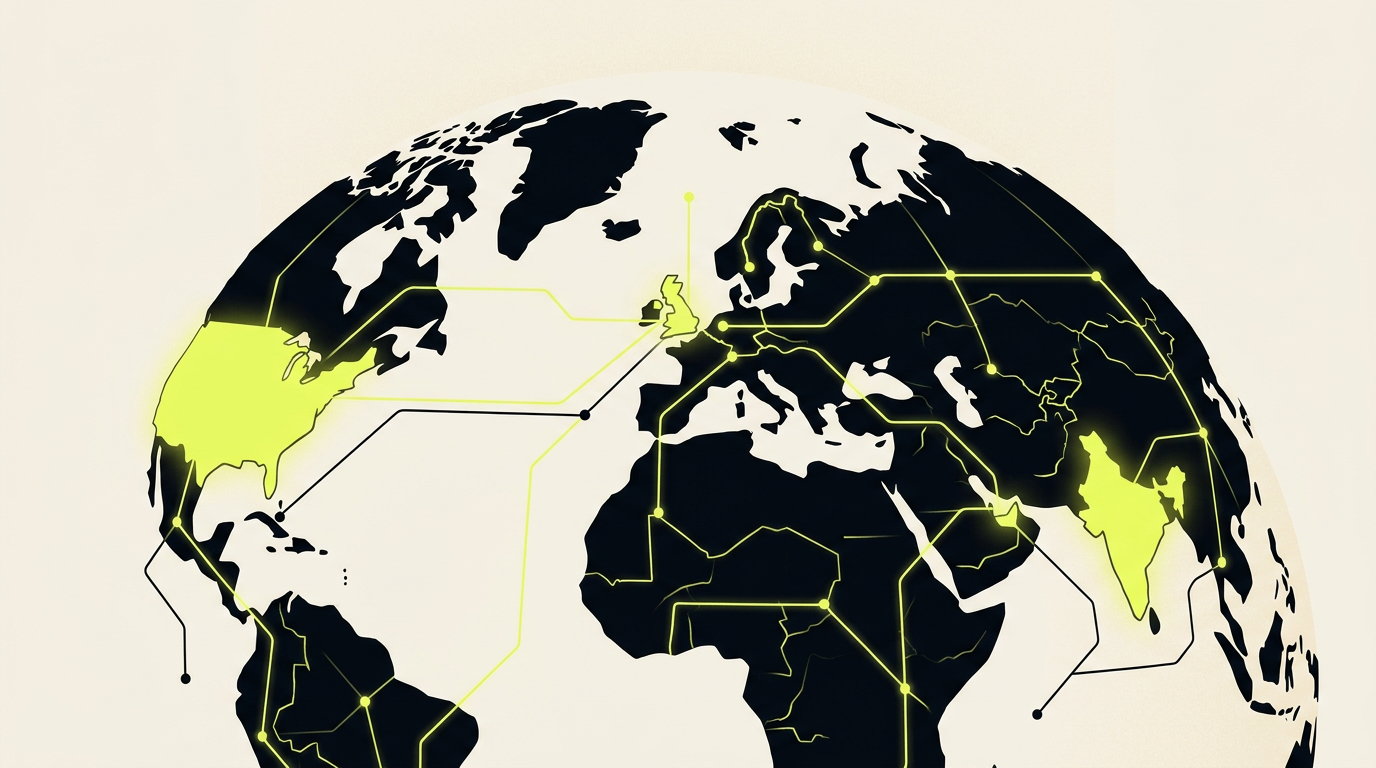
Here's a number that should worry you if your business depends on Google traffic: in Google's AI Mode, as many as 93% of searches now end without a single click to any website. Across regular search overall, multiple 2026 studies converge around 58-60% of all searches ending with zero clicks. Some sectors — health, encyclopedic, informational content — have lost 40-70% of their organic traffic in a single year. If your rankings look fine but your traffic doesn't, this is almost certainly why.
What's actually happening
Google's AI Overviews and AI Mode now answer the user's question directly on the results page, before they ever need to click through to a website. You can still rank #1 for a keyword and see your traffic collapse anyway, because the answer that used to require a visit is now sitting right there in the search results. This isn't a ranking problem. It's a structural shift in what "ranking well" even gets you.
The acceleration has been fast. Google expanded AI Overviews from a narrow test into a feature triggering on roughly half of all queries, and it's now reaching into local, commercial, and comparison-style searches that used to reliably send visitors to business websites.
Why some businesses are hit harder than others
The damage isn't uniform, and understanding where you sit matters more than panicking about the overall number:
- Hit hardest: Generic informational content — basic how-to guides, definitions, standard explainer articles. If a search can be fully answered in three sentences, Google is increasingly doing exactly that instead of sending a click.
- Hit moderately: Comparison and consideration-stage content, where AI Overviews now summarize options but users often still click through to verify specifics or see full pricing.
- Barely affected: Transactional and purely local searches ("book a consultation near me," "buy [specific product]"), and e-commerce, where Google has actually pulled back AI Overview coverage because AI-generated answers weren't converting into sales.
If your content strategy leans heavily on generic informational posts, you're in the highest-risk category. If it's built around specific, branded expertise and transactional intent, you're much better positioned than the scary headline number suggests.
The part that doesn't get talked about enough
Not all zero-click traffic is bad news. Being cited by name inside an AI Overview — even without a click — builds brand recognition that shows up later as direct traffic and branded search. And the clicks that do come through AI search tend to convert at meaningfully higher rates than traditional organic clicks, because the visitor already has more context by the time they arrive. Fewer visitors, but visitors who are further along, isn't automatically worse for your business — it's a different shape of value that needs a different way of measuring success.
What actually still works in 2026
- Content built around information that can't be summarized away — primary research, original data, real case studies, and interactive tools give someone a reason to actually visit rather than just read a one-paragraph summary.
- Optimizing to be the cited source, not just the ranked result. This means clear, well-structured answers early in your content, backed by credible expertise — the same content that ranks well is increasingly the content AI systems choose to quote.
- Doubling down on transactional and local content, where the zero-click shift barely applies and traffic still converts normally.
- Measuring brand impressions and citations, not just clicks, so you're not judging your content strategy against a metric that's structurally declining regardless of how good the content is.
Five questions to ask about your own site right now
- What share of our content is generic informational content versus content built around real expertise or data?
- Are we tracking brand mentions and citations in AI Overviews, or only measuring clicks?
- How much of our traffic and leads come from transactional searches versus informational ones — and is our content mix matched to that reality?
- Do our highest-value pages give someone a reason to click through, or could an AI system fully answer the query from the page alone?
- Are we still measuring SEO success purely by traffic, when impressions, citations, and lead quality might now matter more?
The mistake to avoid
Panicking and abandoning content investment entirely. The instinct when traffic drops is to assume content marketing stopped working — but the businesses losing the most are the ones producing generic, commodity content that was always going to be the first thing absorbed by AI answers. The businesses holding steady or growing are the ones that shifted toward original, specific, hard-to-summarize content instead of pulling back altogether.
The next step
Audit your current content against the two categories above — generic and easily summarized, versus specific and worth visiting for. That single exercise tells you more about your real exposure to this shift than any traffic dashboard will. If you want help rebuilding a content strategy for a search landscape that's actually changed, see our content creation services or email pixelorcode@gmail.com.